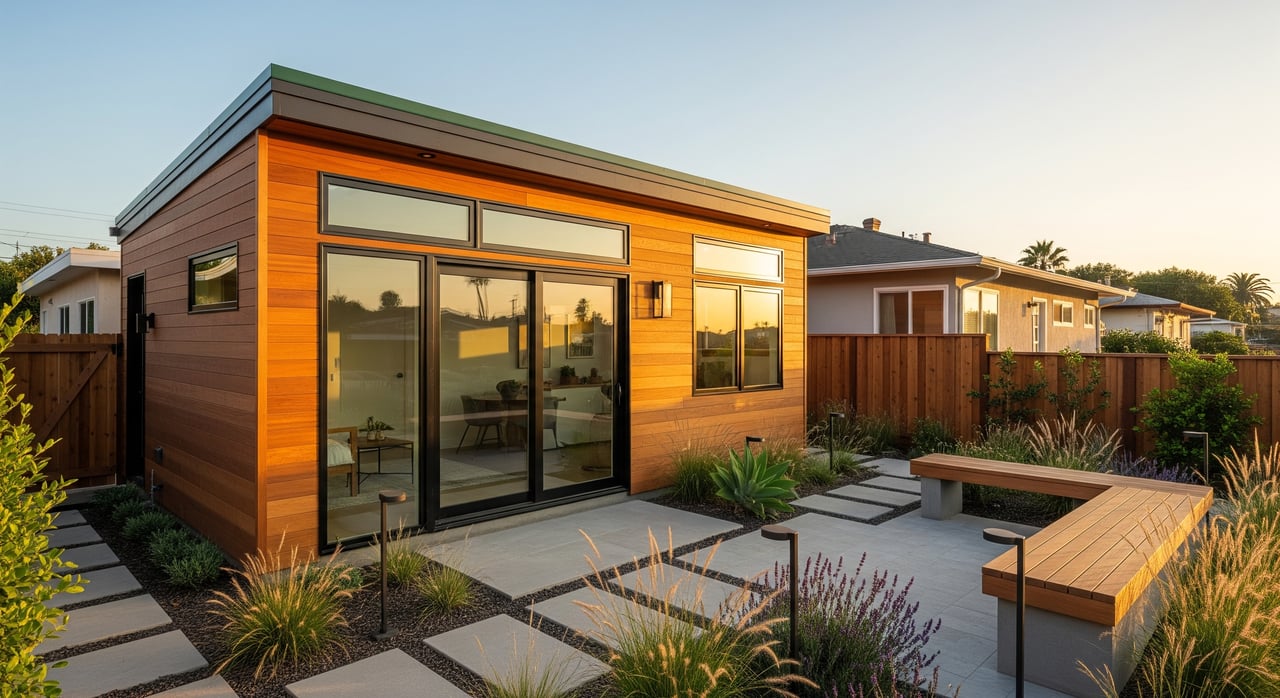
Thinking about turning your Torrance property into a steady income stream with an ADU? With California’s pro-ADU laws and a clear permit path, many South Bay homeowners are adding rentable studios and one-bedrooms in a backyard, side yard, or converted garage. In this guide, you’ll learn how the rules work, what to check on your lot, how long permits and construction may take, and how to run a simple cash flow analysis. Let’s dive in.
Why an ADU in Torrance
An ADU can help you unlock rental income while adding long-term value to your property. California state law supports ADU production and limits many local barriers, which makes permitting more predictable. If you already own the land, you can often create a compact, efficient unit that renters value.
Before you start, get a clear plan for eligibility, costs, utilities, and rent potential. A little prep up front can save months later.
What the law allows
State ADU statutes shape what cities can require. The big takeaways:
- Ministerial review. If your ADU meets objective standards, cities process the permit ministerially. State law sets action timelines on complete applications, commonly within about 60 days. See the state’s overview in the HCD ADU resources.
- Parking limits. State rules often waive ADU parking in specific situations, including proximity to transit. Check local practice, and use LA Metro’s transit maps to evaluate your location.
- Owner-occupancy. State law removed many owner-occupancy requirements for ADUs. Some JADUs may differ, so confirm what applies to you in Torrance.
- Fees. Impact and connection fees are limited for smaller ADUs and must be proportional. Local fee schedules still apply.
For local procedures and handouts, start with the City of Torrance website.
Check your lot
Confirm how your property fits Torrance’s zoning and development standards before drawing plans.
Zoning and use
- Verify your parcel’s zoning and whether it is single-family or multi-family. Multi-family lots can sometimes support more than one ADU under state rules.
- Ask Planning how an attached vs. detached ADU is treated on your lot.
Setbacks and placement
- Detached ADUs often benefit from reduced side and rear setbacks in California, though exact numbers are local. Fire access can affect placement.
- Plan safe access and required exits. A clear path from the street may be needed for fire and life safety.
Height and design
- Detached ADUs usually have lower height limits than the main home. Some cities restrict second stories on detached units. Confirm what applies on your street.
Parking rules
- Parking can be exempt in many locations, especially near transit. If parking is required, ask whether tandem or uncovered stalls are allowed and whether converting a garage triggers replacement parking.
Utilities and sewer
- Confirm sewer capacity and connection steps. Some projects need lateral upgrades or connection permits.
- Ask about separate meters for power, gas, and water and whether panel upgrades are likely.
Special overlays
- If your property falls under any local overlay or special review, you may face added steps. Torrance does not front the ocean, but still confirm any applicable overlays with Planning.
For current checklists and contacts, use the City of Torrance website.
Permits and timeline
Step-by-step permitting
- Meet with Torrance Planning for a pre-application check of zoning, setbacks, and submittal needs.
- Prepare a site plan, floor plan, and elevations. Add structural or civil plans as needed.
- Submit your ADU application to Planning and Building. Ask about electronic submittal.
- Respond to plan check corrections from the Building Division.
- Pull permits, build, schedule inspections, and obtain final occupancy.
How long it takes
- Application review for ministerial ADUs is guided by state timelines, commonly around 60 days after your application is complete.
- Plan check to permit issuance often runs 2 to 6 months for simpler projects. New detached units with utility work can be on the longer end.
- Typical construction durations:
- Garage conversion or attached ADU: about 2 to 4 months.
- New detached ADU: about 3 to 8 months.
- From first planning call to move-in, many homeowners see 6 to 12 months total, depending on scope and contractor schedule.
Fees and budgets
Budget for permits, plan check, impact or connection fees, design, and utility upgrades. State rules limit certain ADU fees, but local schedules still apply. For building code standards, see the California Building Standards Commission. To understand how improvements may affect assessed value, visit the Los Angeles County Assessor.
Cost ranges and planning
Your total cost depends on size, finishes, and whether you build new or convert. Think in categories:
- Hard costs: foundation, framing, roof, windows, mechanical, finishes.
- Soft costs: architecture, engineering, permits, impact or connection fees, surveys.
- Site costs: grading, demo, retaining walls, driveways, landscaping, accessibility.
- Financing: loan fees and interest during construction.
- Operating: insurance, repairs, utilities if you pay them, property tax changes, reserves, and management.
Per-square-foot costs vary widely in Los Angeles County. Conversions can cost far less than ground-up builds. Get multiple local bids and keep a contingency for overruns.
Estimate rent in Torrance
To estimate rent:
- Pull comparable ADUs and small one-bed or studio rentals in Torrance and nearby areas. Use multiple sources like Zillow, Apartments.com, Zumper, Craigslist, and Rentometer.
- Compare per-square-foot rents and adjust for bedroom count, private outdoor space, parking, and finishes.
- Consider proximity to commuting corridors like the 405 and 110, and access to transit. Use LA Metro maps when evaluating locations that could affect both rent and parking requirements.
- Use conservative assumptions. Many owners model vacancy at 5 to 8 percent and rent growth at 2 to 4 percent unless you have stronger local data.
Simple cash flow pro forma
Start with a clear framework so you can compare scenarios.
- Inputs: monthly rent, vacancy rate, other income, annual operating costs, annual debt service, total project cost, equity and loan amounts.
- Formulas:
- Effective Gross Income = (Rent x 12) x (1 − vacancy) + other income
- NOI = Effective Gross Income − Operating Expenses
- Annual Cash Flow Before Tax = NOI − Annual Debt Service
- Cash-on-Cash = Annual Cash Flow Before Tax ÷ Equity Invested
- Cap Rate = NOI ÷ Total Project Cost
Example, illustrative only:
- ADU rent: $2,100 per month
- Vacancy: 6 percent
- Annual gross rent: $25,200
- EGI: $25,200 x (1 − 0.06) = $23,688
- Operating expenses: $6,000 per year
- NOI: $17,688
- Annual debt service: about $12,900 on a $200,000 loan at 5 percent, 30-year amortization
- Cash flow before tax: about $4,788
- If equity invested is $100,000, cash-on-cash is about 4.8 percent; cap rate is about 8.8 percent when total project cost is $200,000.
Run sensitivity checks. Vary rent by plus or minus 10 to 15 percent, and test higher utility or tax costs, so you understand downside risk.
Next steps and resources
- Confirm city requirements. Start at the City of Torrance website and search for “Accessory Dwelling Unit,” “Planning Division,” and “Building Permits.”
- Request a pre-application meeting with Planning and Building.
- Get apples-to-apples bids from 2 to 3 local architects and contractors. Include utility upgrades in scope.
- Research rents from multiple listing platforms for similar units.
- Talk to a lender about construction or renovation financing, and consult a CPA on taxes and depreciation.
- Use HCD’s ADU resources for statewide guidance.
Ready to explore your ADU strategy?
If you want rental income and long-term value, an ADU in Torrance can be a smart move. Our South Bay team can help you evaluate rent potential, understand neighborhood demand, and connect you with local pros so your permit and build go smoothly. For a low-pressure consultation and a data-backed plan, reach out to Rahul Bhagat.
FAQs
What is an ADU and who can build one in Torrance?
- An ADU is a secondary residential unit on a lot with a primary home. California law enables ADUs on many residential parcels, subject to objective standards and ministerial review when you meet them.
Do I need parking for an ADU in Torrance?
- State rules limit when cities can require ADU parking, and many locations near transit qualify for parking exemptions. Confirm your site and review LA Metro maps to assess proximity to transit.
How long do ADU permits take in Torrance?
- For ministerial ADUs, state law sets action timelines on complete applications, commonly about 60 days. Plan for 2 to 6 months from submittal to permit, depending on complexity and corrections.
Will building an ADU change my property taxes?
- Adding an ADU can affect assessed value. For assessment questions and processes, see the Los Angeles County Assessor.
Do I have to live on the property if I build an ADU?
- State law removed many owner-occupancy requirements for ADUs, but some JADUs or local programs may differ. Verify current requirements with Torrance Planning.
Where can I find official ADU guidance?
- Use the California HCD ADU resources for statewide rules and the City of Torrance website for local checklists, contacts, and permit steps.